
Real places, reported hauntings, and a comfortable corner to explore their stories.
This post contains affiliate links. If you buy through these links, I may earn a commission. As an Amazon Associate I earn from qualifying purchases.
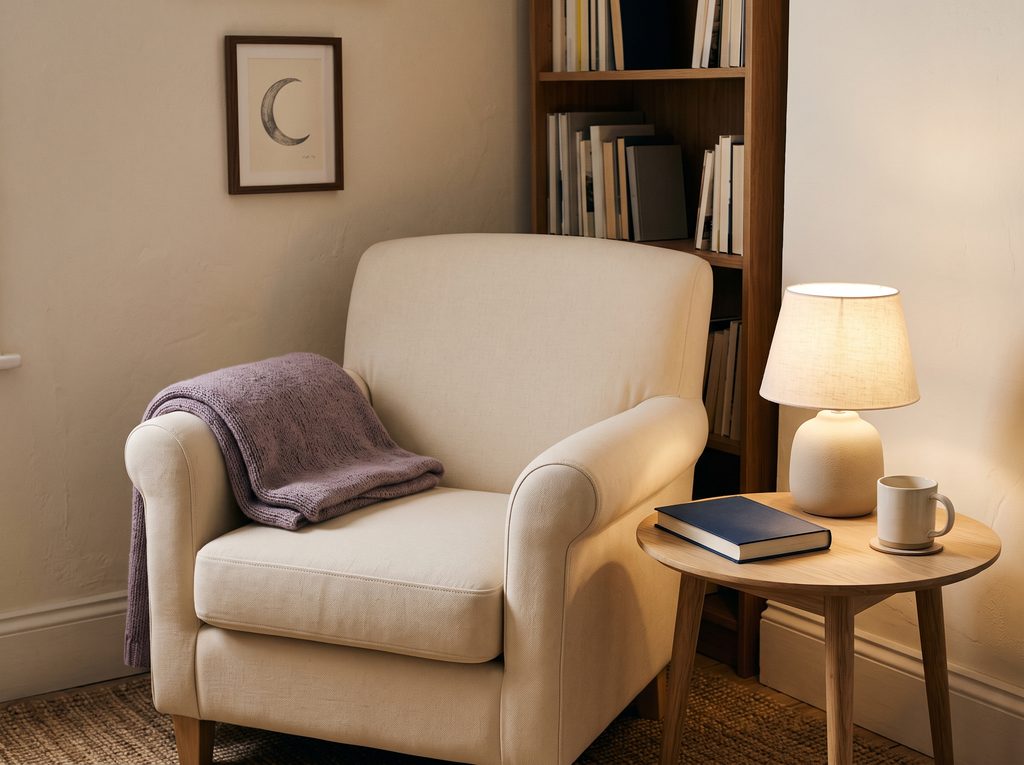
Reading-night inspiration featuring original imagined decor. Linked items are separate suggestions, not the exact objects pictured.
There is something especially intriguing about a ghost story attached to a place you can find on a map. An old house, a historic hotel, or a familiar Virginia landmark gives you somewhere to picture while you read.
My preference is for books about reported hauntings and real locations. One I have read is Haunted Plantations of Virginia by Beth Brown. That is the kind of place-based reading I have in mind for this evening: a little history, a little mystery, and a comfortable place to turn the pages.
You don't need to finish an entire book or create a perfect reading nook. Choose one account or chapter, make a drink, and give yourself some time to be curious.
1. Choose the kind of haunted history you want to explore
A regional collection lets you stay close to home. A wider collection takes you from one location to another. An investigation-focused book introduces witnesses and paranormal researchers, while a history-focused book asks how a place acquired its haunted reputation.
The buildings and locations can be real even when the supernatural explanations remain disputed. In this post, “haunted” refers to reported experiences and local traditions, rather than verified evidence of ghosts.
For a relaxed evening, start with a place that interests you and read a sample before choosing a book. Real-life haunting collections can include upsetting histories, even when the reading setup is cozy.
Four books to consider
Haunted Plantations of Virginia — Beth Brown
This is the title on this list I have personally read. Schiffer's description identifies locations including the Adam Thoroughgood House, Bacon's Castle, Berkeley, and Red Hill. It brings a Virginia focus to an evening exploring accounts connected with historic houses.
Explore Haunted Plantations of Virginia by Beth Brown.
America's Most Haunted — Eric Olsen and Theresa Argie
For an investigation-focused option, the publisher describes a tour of American paranormal locations through accounts and interviews. The Queen Mary is among the places featured. Consider this if you are curious about how investigators and witnesses describe their experiences.
Take a look at America's Most Haunted.
Haunted America — Michael Norman and Beth Scott
This collection ranges across the United States and Canada, with places such as Little Bighorn and the White House included in the publisher's description. It offers a broader geographic selection if you would rather browse several locations than stay within one region.
Explore the locations in Haunted America.
Ghostland: An American History in Haunted Places — Colin Dickey
This is the more skeptical, history-focused option. Dickey examines the stories attached to supposedly haunted places and the ways those stories change, including what they reveal or obscure about American history. Consider it if the origins of a haunting story interest you as much as the account itself.
The three additional titles are researched reading suggestions based on publisher descriptions, and suggested from my Ghost shelf on GoodReads, not books I am presenting as personal reviews.
2. Give the real place a little attention
Before settling into the story, note the location's name and look for its official museum, historic-site, or preservation website. A photograph of the building, a short timeline, or a map can give you a clearer sense of where the account takes place.
You might keep three questions beside you:
- What is documented about this place?
- What do people report experiencing there?
- Which parts of the story are uncertain or have changed in the telling?

A few notes can help you separate the place's history from the stories told about it.
When reading about plantations, include the lives and histories of enslaved people in that context, rather than treating the site only as an atmospheric old house. The people who lived and worked at these places matter beyond the ghost stories.
If a location inspires a future visit, check its official visitor information separately. A mention in a book is not confirmation that a property is currently open to the public.
3. Make the reading spot comfortable
Choose the chair, sofa, or bedside spot where you naturally like to read. Add a cushion if you need one, keep a blanket within reach, and clear a small surface for your essentials.
A shaded lamp can create a gentle atmosphere while still giving you useful light. Position it so you can see the page comfortably without glare or having to lean toward it. A dark room is optional; readable pages are not.
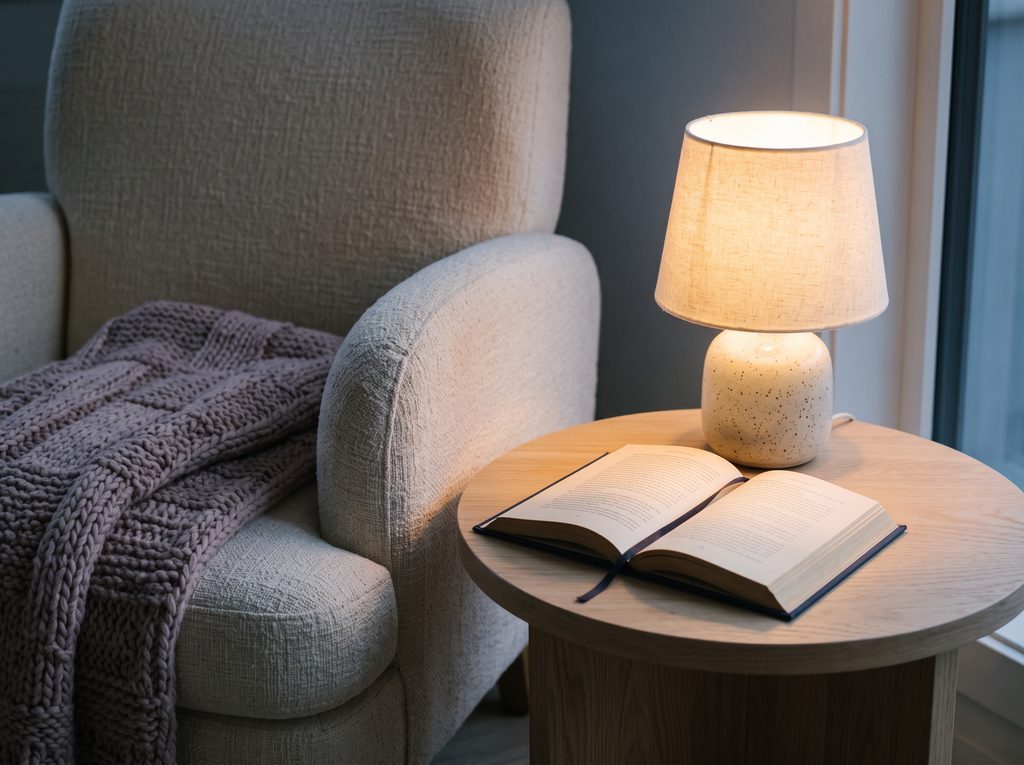
Soft surroundings and enough light to enjoy the page.
One small moon or star detail is enough if you want to bring in a celestial mood. Your favorite mug or a little print can do that without rearranging the whole room.
For more styling ideas, visit Simple Ways to Bring Celestial Charm into Your Home.
See a reading light for your favorite corner.
4. Bring a drink and a small snack
Choose something easy to enjoy while reading. A mug of tea or cocoa and a small plate of crackers, cheese, or cookies can be plenty.
Keep the mug on a stable surface away from the book, and have a napkin nearby. If you want a larger snack selection, pause for a proper snack break so you can enjoy the food without juggling pages and plates.
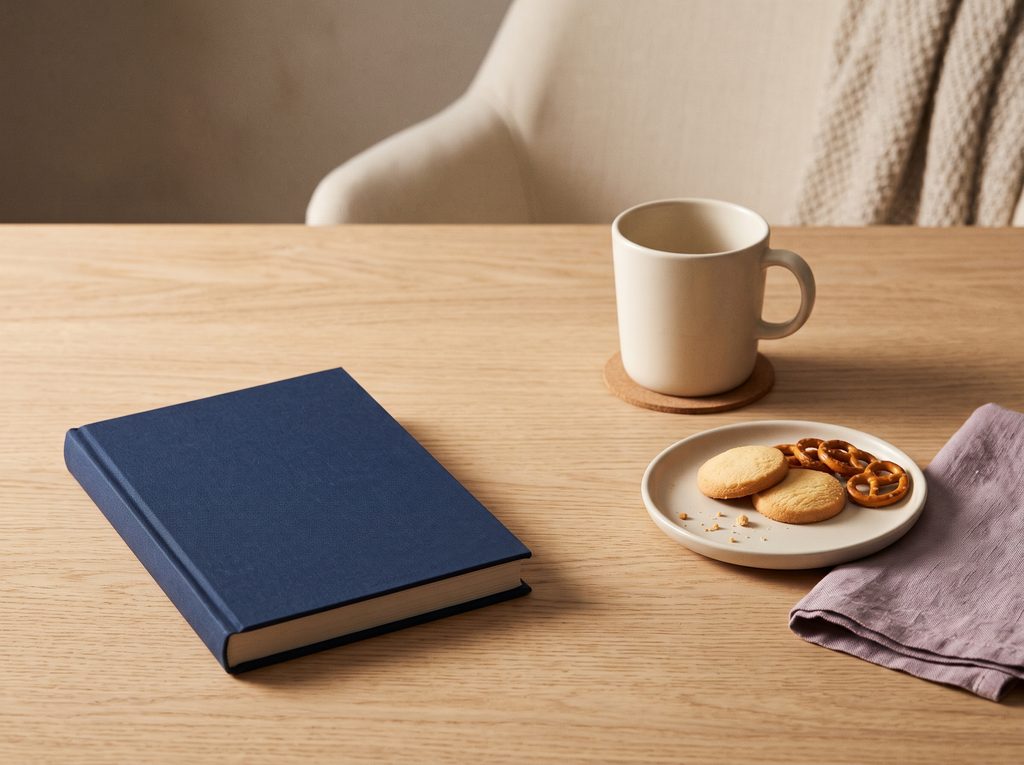
A simple snack break gives the story a moment to linger.
A Cozy Halloween Snack Board for a Night In has an easy mix of sweet and savory ideas, including smaller portions for one person.
5. Give the evening a gentle shape
Pick one chapter, one location, or a comfortable stretch of time. You can always keep reading, but a small starting point makes the evening easy to begin.
Here is one possible hour:
| Time | What to do |
|---|---|
| First 10 minutes | Get comfortable, make your drink, and choose a chapter |
| Next 30 minutes | Read about one place or follow the account as far as you like |
| Next 10 minutes | Take a snack break or look up a historical detail |
| Last 10 minutes | Jot down a thought and mark where you want to return |

A chapter and a little time to reflect can be a complete evening.
If a story becomes heavier than you expected, choose another chapter or put the book down. “Slightly spooky” can mean different things on different evenings.
Reading with someone else can work, too. Each person could choose a location to read about, then share what they found most interesting over a drink.
6. Choose a free bookmark to match your mood
To bring a little of the evening into your next reading session, download this set of four free printable bookmarks, each with a different mood:

Four moods for your next reading night: Cozy Haunting, Moonlit Mystery, Gothic Library, and Autumn After Dark.
Print the landscape US Letter sheet at 100% or Actual Size, then cut along the guides. Each bookmark measures 2 × 6 inches. Use cardstock compatible with your printer, or print on ordinary paper and attach it to a lightweight card backing.
Choose the design that suits tonight's reading, tuck it into your book, and save the others for another mood.
7. Leave a little curiosity for next time
Before you finish, write down the name of one place or one question you would like to return to. It might be a detail you want to check, a building you want to see in photographs, or another book to borrow from the library.
Try a short note:
“The place I want to learn more about is…”
You don't need to reach a conclusion about every reported experience. Learning more about the setting, the people, and the way a story has been told can be enough.
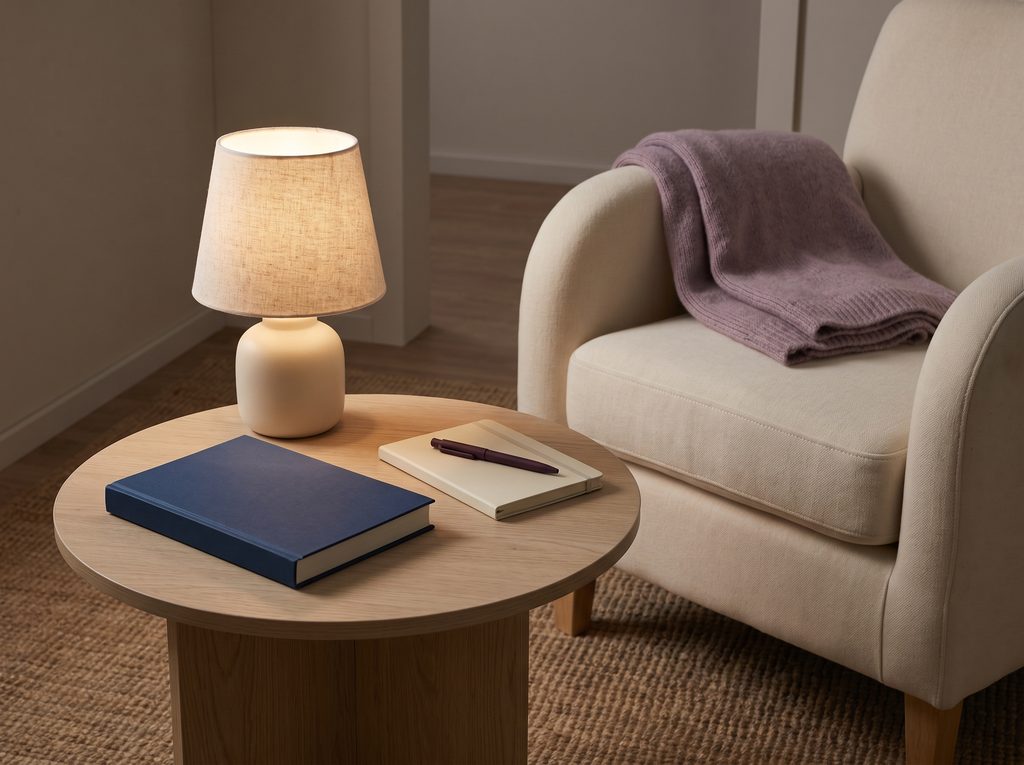
Leave a place in the book; and a question for another evening.
Which draws you in first: a Virginia landmark, an old hotel's ghost stories, or the history behind a place's haunted reputation?